

Root Canal Therapy in Stouffville
Root Canal Therapy Near You
A painful tooth can make simple things like eating, drinking, or sleeping difficult. Sometimes, the problem is deeper than what you can see on the surface. When the pulp inside a tooth becomes inflamed or infected, root canal treatment may save the tooth. At Shin Dentistry, we provide root canal therapy in Stouffville for patients with certain problems affecting the inside of a tooth.
If you have been searching for a dentist near you because of ongoing tooth pain or sensitivity, our team is ready to help. We begin by listening to your concerns and examining the affected tooth so we can explain what may be happening and whether root canal treatment is appropriate.
What Is Root Canal Therapy?
Root canal therapy treats problems involving the pulp, the soft tissue inside a tooth that contains nerves and blood vessels. Deep decay, cracks, trauma, or other damage can inflame or infect the pulp.
During treatment, the dentist removes the affected pulp. The dentist then cleans, shapes, disinfects, fills, and seals the root canals. The tooth is restored afterward with a filling or crown, depending on its condition and location.
Our dentist in Stouffville can determine whether root canal therapy is suitable after examining the tooth.
When Might You Need Root Canal Therapy?
Tooth pain does not always mean you need root canal therapy, but certain symptoms can indicate a problem with the pulp or tissues around the tooth.
You need an assessment if you have:
Persistent or severe tooth pain
Pain when biting or chewing
Sensitivity to hot or cold that lingers
Swelling or tenderness around a tooth
A pimple-like bump on the gums near a tooth
A tooth that has become darker
A chipped or cracked tooth with pain or sensitivity
Some teeth that need root canal treatment cause few or no obvious symptoms. Dental exams and X-rays can sometimes identify changes before you notice pain.
If you are looking for a dental clinic near you for persistent tooth discomfort or swelling, Shin Dentistry can assess the tooth and discuss the right next steps.
What Are the Benefits of Root Canal Therapy?
When appropriate, root canal therapy may help:
Remove inflamed or infected pulp tissue
Relieve pain caused by inflammation or infection
Preserve the natural tooth
Avoid extraction when the tooth can be restored
Restore comfortable biting and chewing
Help prevent infection from progressing
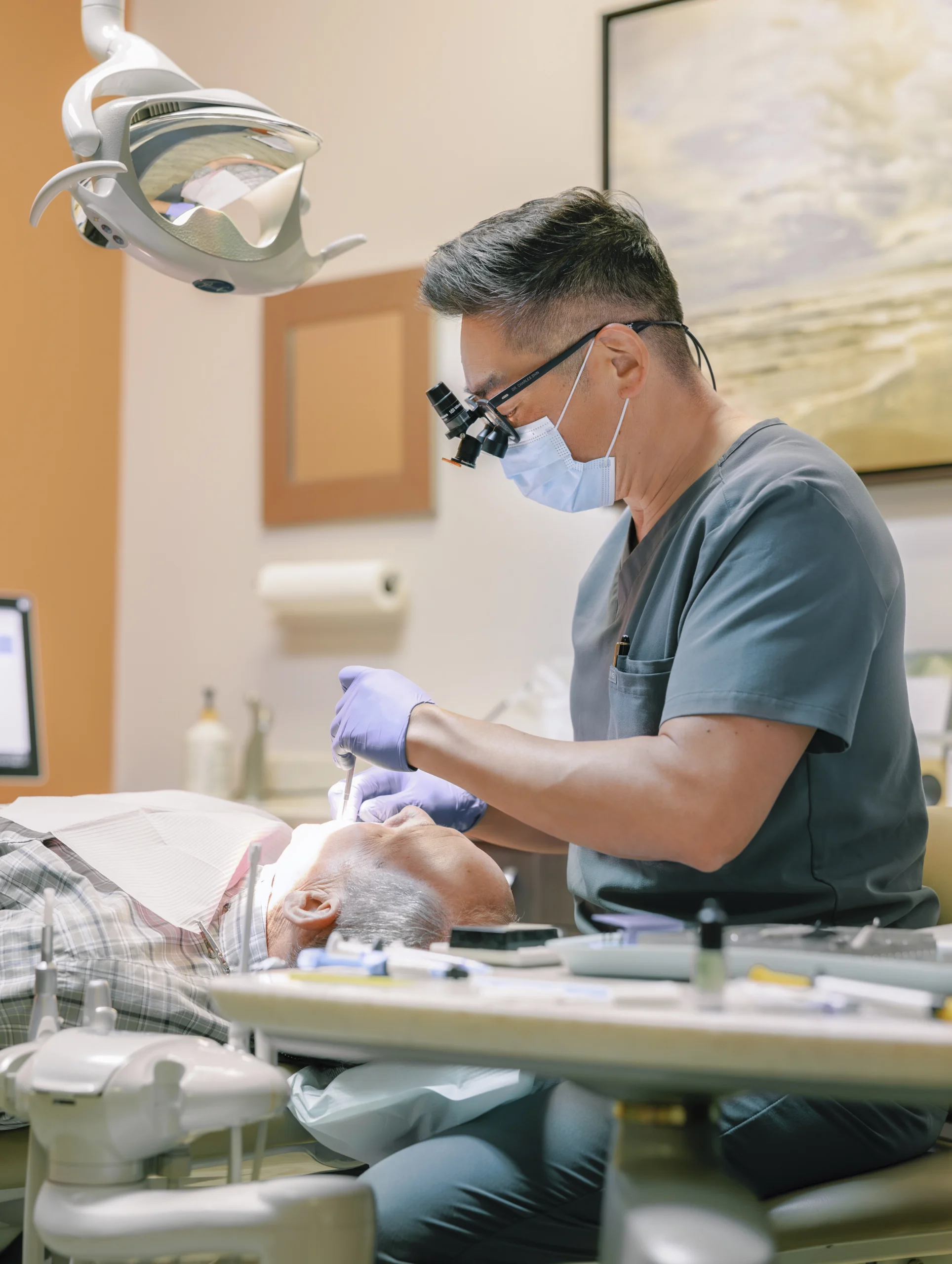
What to Expect During Root Canal Therapy
The process generally includes:
Examination
Your treatment begins with an examination and a discussion about your symptoms.
Imaging
We may use digital X-rays to assess the tooth and the area around its roots.
Local anaesthesia
The area is numbed to help keep you comfortable.
Isolation
The tooth is isolated to keep it dry and reduce contamination.
Cleaning
We make an opening in the tooth and remove the inflamed or infected pulp.
Shaping and disinfecting
The root canals are carefully cleaned, shaped, and disinfected.
Filling and sealing
The canals are filled and sealed to help prevent bacteria from re-entering.
Restoration
The tooth is restored with a filling or crown, depending on its condition and location.
Restoring the Tooth After Root Canal Therapy
A tooth still needs to be restored after root canal treatment. Depending on how much healthy tooth structure remains and where the tooth is located, your dentist may recommend a filling or crown.
Back teeth often experience greater chewing forces and commonly need the added protection of a crown. If a crown is recommended, Shin Dentistry offers in-house CEREC technology for many suitable cases.
How to Care for Your Tooth After Root Canal Therapy
The tooth and surrounding area may feel tender for a few days after treatment. Follow your dental team’s instructions and avoid chewing hard foods on the treated tooth until it has been permanently restored.
Continue brushing and cleaning between your teeth regularly. A root canal-treated tooth can still develop decay or gum problems.
Contact Shin Dentistry if you develop severe or increasing pain, significant swelling, or other concerning symptoms.
Why Choose Shin Dentistry for Root Canal Therapy?
Serving Stouffville since 2003
Dr. Charles Shin opened the practice here in 2003, and we welcome patients from Stouffville and surrounding communities.
Advanced digital dentistry
Digital X-rays can help assess the tooth and surrounding structures during diagnosis and treatment planning.
Same-day CEREC crowns
If a crown is recommended afterward, we can create many suitable crowns in-house using CEREC technology.
Same-day emergency appointments
We do our best to provide same-day appointments for urgent concerns, including for new patients.
Convenient visits
We offer front-door parking and evening appointments until 8 p.m. on Mondays and Wednesdays.
Flexible access to care
We accept eligible CDCP patients and dental insurance, and we offer payment options.
Don’t Put Off Persistent Tooth Pain
Don’t ignore tooth pain, lingering sensitivity, or swelling. At Shin Dentistry, we provide root canal therapy in Stouffville to treat inflammation or infection inside a tooth and preserve the natural tooth when appropriate.
Call 905-640-2524 to arrange an appointment at our dental clinic in Stouffville. We are located at 12287 Tenth Line, Unit 5, Stouffville, ON L4A 0Y1.
FAQs
Does root canal therapy hurt?
Local anaesthesia is used to numb the treatment area. You may feel pressure during the procedure, and some tenderness afterward is common.
How long does root canal therapy take?
Treatment time depends on the tooth and the complexity of the problem. Some cases can be completed in one appointment, while others may require more than one visit.
Will I need a crown after root canal therapy?
Not every root canal-treated tooth needs a crown. The recommendation depends on the tooth’s location, how much healthy structure remains, and the forces placed on it. Back teeth commonly need crowns because they handle greater chewing forces.
Can I need root canal therapy without having pain?
Yes. Some problems affecting the pulp or tissues around the root may cause few or no noticeable symptoms.
What happens if I delay treatment?
If the pulp is inflamed or infected and needs treatment, delaying care may let the problem worsen or spread to surrounding tissues. Persistent pain or swelling should be evaluated promptly.